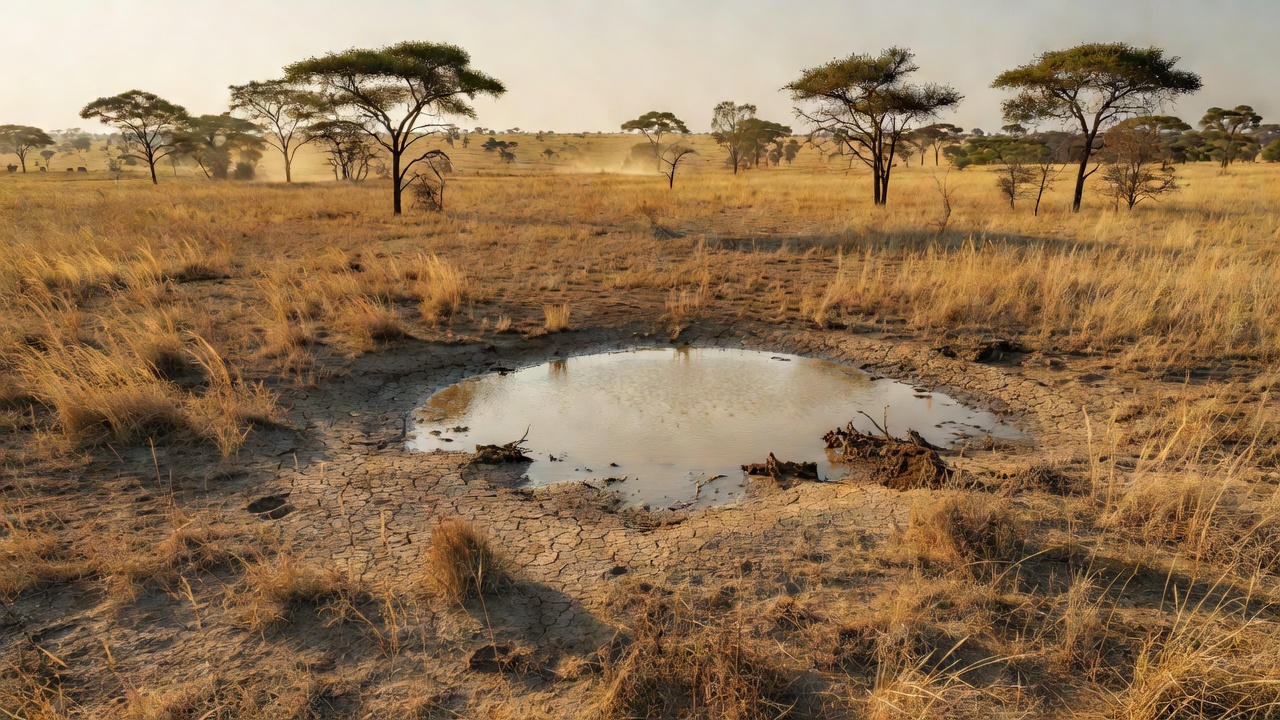
Follow rain before following animals.
Rainfall does more than fill pools. It changes soil moisture, starts plant growth and alters the nutritional value of a feeding patch. A shower falling beyond the horizon can matter more to a herd than a full waterhole beside the road. The response depends on soil, temperature, plant species and what happened there before the rain.
African savannas differ widely. The Serengeti’s seasonal grasslands do not function exactly like the wooded landscapes of Kruger National Park. In the Okavango Delta, an important flood pulse arrives through a river system whose headwaters lie in Angola. Local rainfall and distant water therefore create different ecological calendars. Avoid treating the label “wet season” as a complete explanation.
On a drive, compare the ground around a permanent water source with a more distant patch. Look for tracks, grazing height, bare soil and browsing. Concentrated use may be natural, but adding artificial water can also change where animals feed and how pressure spreads. More available water is not automatically better for every species or habitat.
One grassland, many feeding choices.
Grazers do not all eat the same meal. Body size, mouth shape and digestive systems affect the plants and plant parts an animal can use. Zebra can process relatively fibrous forage through hindgut fermentation. Wildebeest and other ruminants use a different digestive strategy. These differences help explain overlapping ranges without implying that competition disappears.
After rain, young shoots may offer high-quality forage. As plants mature, their structure and nutritional value change. Repeated grazing can maintain short patches under some conditions, while heavy use during stressful periods can reduce cover. A closely cropped lawn is therefore a clue, not a diagnosis. Its meaning depends on rainfall, soil stability and recovery over time.
Fire adds another layer. It can remove old plant material and influence the balance between grass and woody vegetation. Its effects vary with season, frequency, fuel and weather. A recently burned area is not automatically damaged, and an unburned area is not automatically healthy. Fire management requires local ecological knowledge, safety planning and clear conservation objectives.
Soils keep the connections moving.
Plants draw nutrients from soils whose properties reflect geology, organisms and past disturbance. Some soils hold water longer; others drain quickly. These differences can create distinct vegetation patches over short distances. What looks like a random change in the view may follow a boundary you cannot see from the vehicle.
Dung beetles, microbes and other decomposers help return organic material to the soil. Termites can alter soil structure and nutrient distribution, with mounds creating distinctive patches in some landscapes. These organisms are not background decoration. They influence processes that support the much larger animals visitors usually notice first.
Try tracing a simple loop: grass grows, an herbivore feeds, dung reaches the ground, and decomposers process that material. Nutrients cycle, while energy flows through the system and is eventually dissipated as heat. The distinction matters: an ecosystem does not recycle energy in the same way it recycles nutrients.
A seasonal route is part of a place.
The Serengeti–Mara migration illustrates how animals respond to resources distributed across a large landscape. Rainfall and fresh growth influence movement, but the pattern is not a rigid timetable or a guaranteed spectacle at one crossing. Different species, individuals and years can produce different routes and timing.
Movement also matters outside famous migrations. Elephants travel between feeding and watering areas; young carnivores disperse; smaller animals shift among shelter and food patches. Fences, cultivation, roads and settlement can interrupt these connections. A protected core may retain excellent habitat while losing access to resources beyond its boundary.
For a thoughtful observer, the practical question is not simply “Where are the animals?” Ask what the current conditions make possible. Where is fresh growth? Which routes remain open? Where can animals rest without disturbance? These questions connect a single sighting to habitat protection and make quiet stretches of landscape informative rather than disappointing.
Read further
- Serengeti National Park: park and ecosystem context
- UNESCO: Okavango Delta
- South African National Parks: Kruger National Park
General ecological explanations are not forecasts of animal locations or current park conditions.